Print it
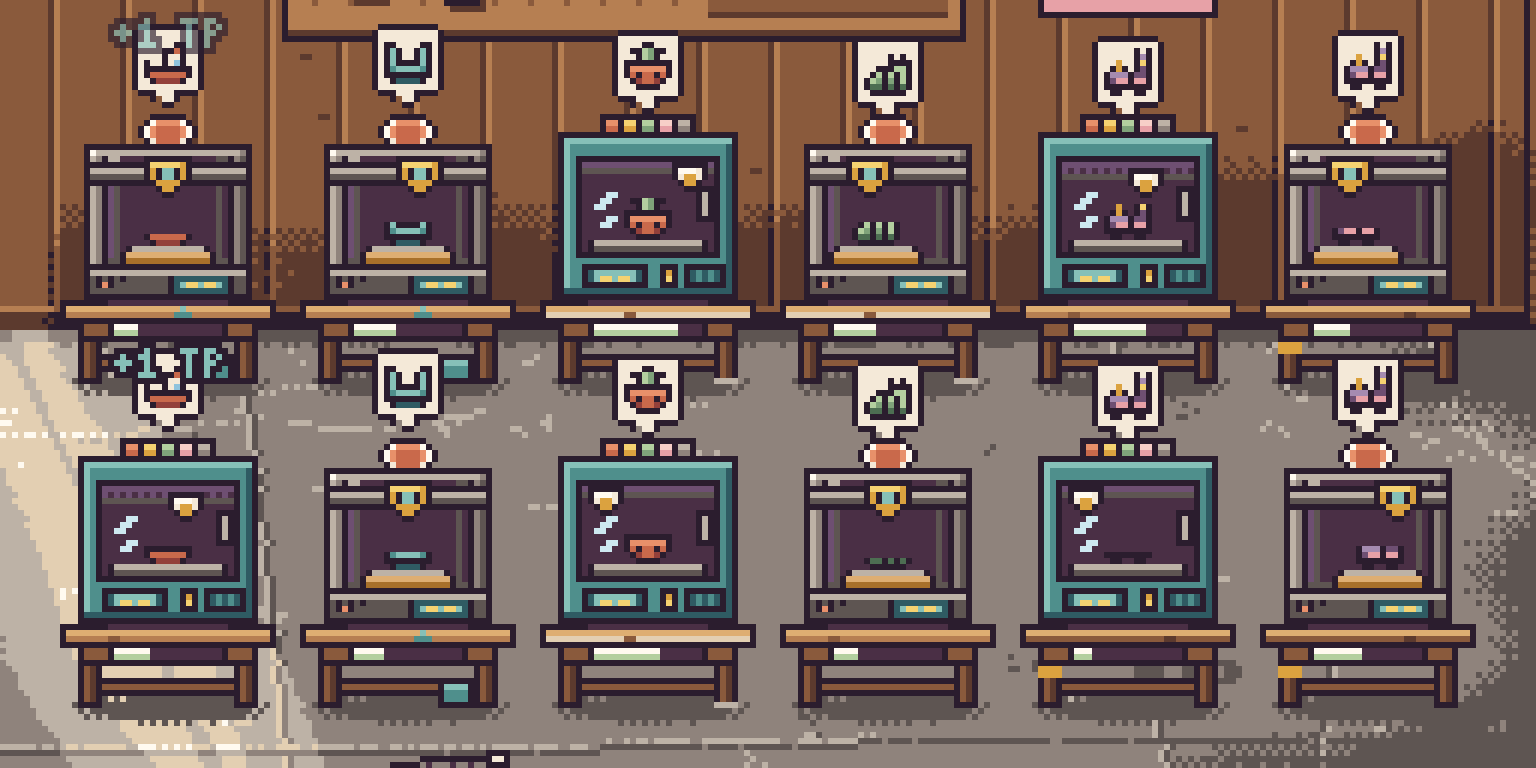
Bedslingers, a CoreXY that hums, and a failure rate that keeps you humble. Every print takes filament, time, and a little luck. Some of them come off the bed as noodles.
A free 3D printing idle game
A cozy idle game about running a 3D print farm. Print things, sand them, sell them, and try to keep the spaghetti to a minimum. Free in your browser.
Garage status: probably fine
How it goes
Bedslingers, a CoreXY that hums, and a failure rate that keeps you humble. Every print takes filament, time, and a little luck. Some of them come off the bed as noodles.
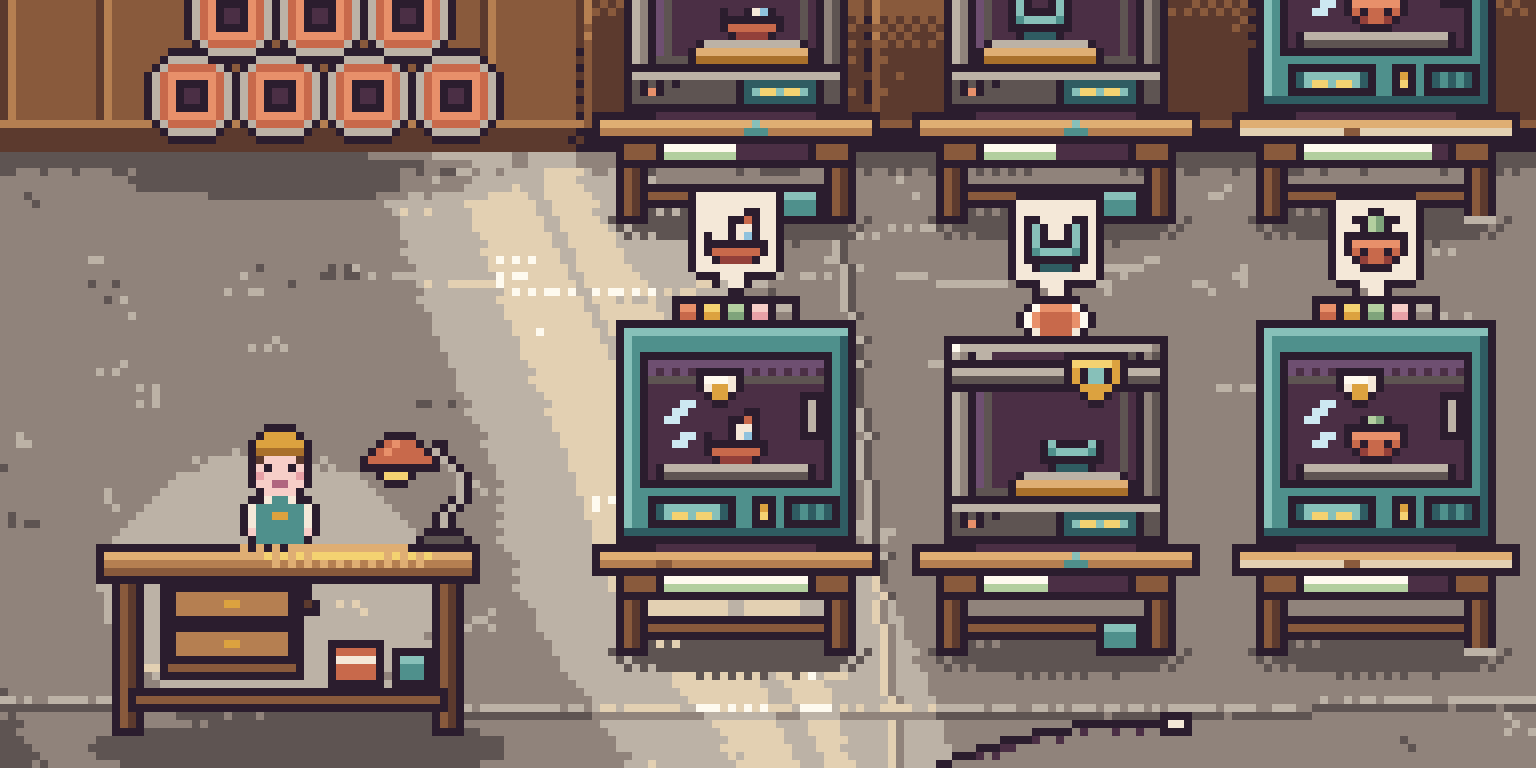
Supports snapped off, sanded, bagged. Your workbench is the bottleneck more often than you would like, which is the most realistic thing in the game.
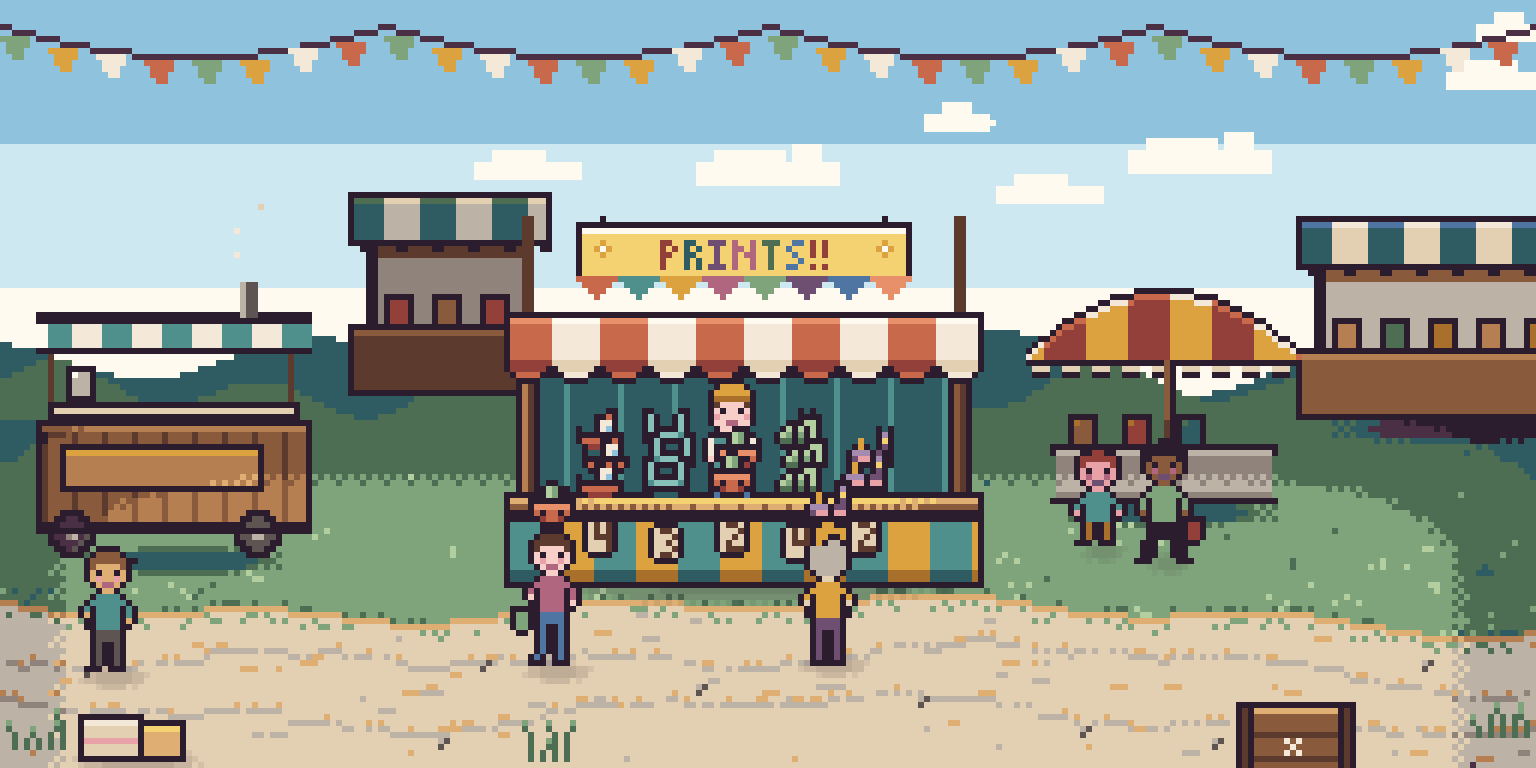
Price your shelf, run a booth at the craft fair, fill special orders for the local hobby shop. Somebody keeps ordering tugboats and asking you to face them toward the door.
The longer version
You start with one printer, a garage with junk piled in most of its corners, and a couple of spools of filament. Tiny Print Farm is a free 3D printing idle game: you print small things, clean them up and sell them, and the farm keeps going while you are off doing something else.
Before the garage opens the game asks what you print on in real life, and your Bedslinger 3000s pick up that machine's habits. The Bedslinger is loud, wobbly and still the one you trust. Research CoreXY Know-How and you can buy a Cube X1: enclosed, much faster, and it hums four notes the first time it wakes up. The garage starts with three benches and the other corners are full of junk. Pay a man with a van, or haul it out yourself and pay for the skip, and there might be something worth keeping in the pile. Clear it all and the garage holds twelve printers.
Prints fail. Sometimes the first layer never takes and you get a small gray cloud instead of a boat. Scrape the bed carefully and you get some of the filament back. Every failure still earns a tinker point, because you learned something, allegedly, and a Spaghetti Cam will clean up after you while you are away.
Nothing sells raw. Every print goes over the bench first: supports off, a sand, a check and a bag. The bench is usually the slow part, and a little flag shows you which stage is holding everything up. Proper flush cutters help. So does the neighbor's kid, who works weekends for pizza and tugboats.
The online shop sells what is on the shelf at the price you set. Craft fairs send invites, so you pack a crate, pay the booth fee and find out what that crowd goes for. Special orders come from people like Grandma Ruth, who is buying for all fourteen grandkids again, and a robotics club whose robot ate the last batch.
Prints earn tinker points, and the Lab has four branches to spend them in: hardware, the workshop, new designs and the business side. That is where you find the Glue Stick Ritual, a Filament Dry Box, and the designs for a Fidget Slug, a Wiggle Dragon and a full size Space Helmet that ties up your best printer for ages.
A few minutes in, a note arrives signed H. Arbor. She would like one of the little tugboats, set facing the door, and she pays an oddly exact amount for it. She says she will explain when she knows you better. Her order never expires, and she keeps writing.
The first chapter ends when you have saved $25,000 and sold a Space Helmet, because the landlord of the rented unit wants to see a portfolio. Once you have earned $10,000 you can also Pivot, which is a new sign over the same door. The run starts again, your Patents stay, and anything you owned before is cheaper the second time.
It runs in your browser on a phone or a computer, so there is nothing to download and no account to make. Your farm saves in your own browser. Close the tab and the printers keep going for up to four hours, or twelve once you have the Power Nap Protocol, and a welcome back card tells you what happened while you were out. There is also a garage cat called Mochi. She can be petted, and she keeps count.
Made by a real print farm
Tiny Print Farm is made by Bifrost Manufacturing, a real manufacturer that does 3D printing, CNC machining and finishing.
The prints that fail, the workbench that is always behind and the buyers with very particular tastes all came from somewhere. In the game, Bifrost is the shop across town that you used to work at.
Before you ask
If yours is not here, write to us. Someone reads it.
Yes, in your browser, forever.
Later, for shop managers, and rolls are always earnable in game. Odds are shown. Real money never buys a roll.
Yes. Come back to a full shelf and a report.
Bifrost Manufacturing makes the game and is a real manufacturer. In game they are the shop across town that you used to work at.
Yes. Free STL files land with the next update.
One letter per update
What changed, what is coming, and the occasional note from a customer who only buys tugboats.